
October 26, 2026
What Is BPO and a Call Center? How They Work, Jobs and Business Benefits
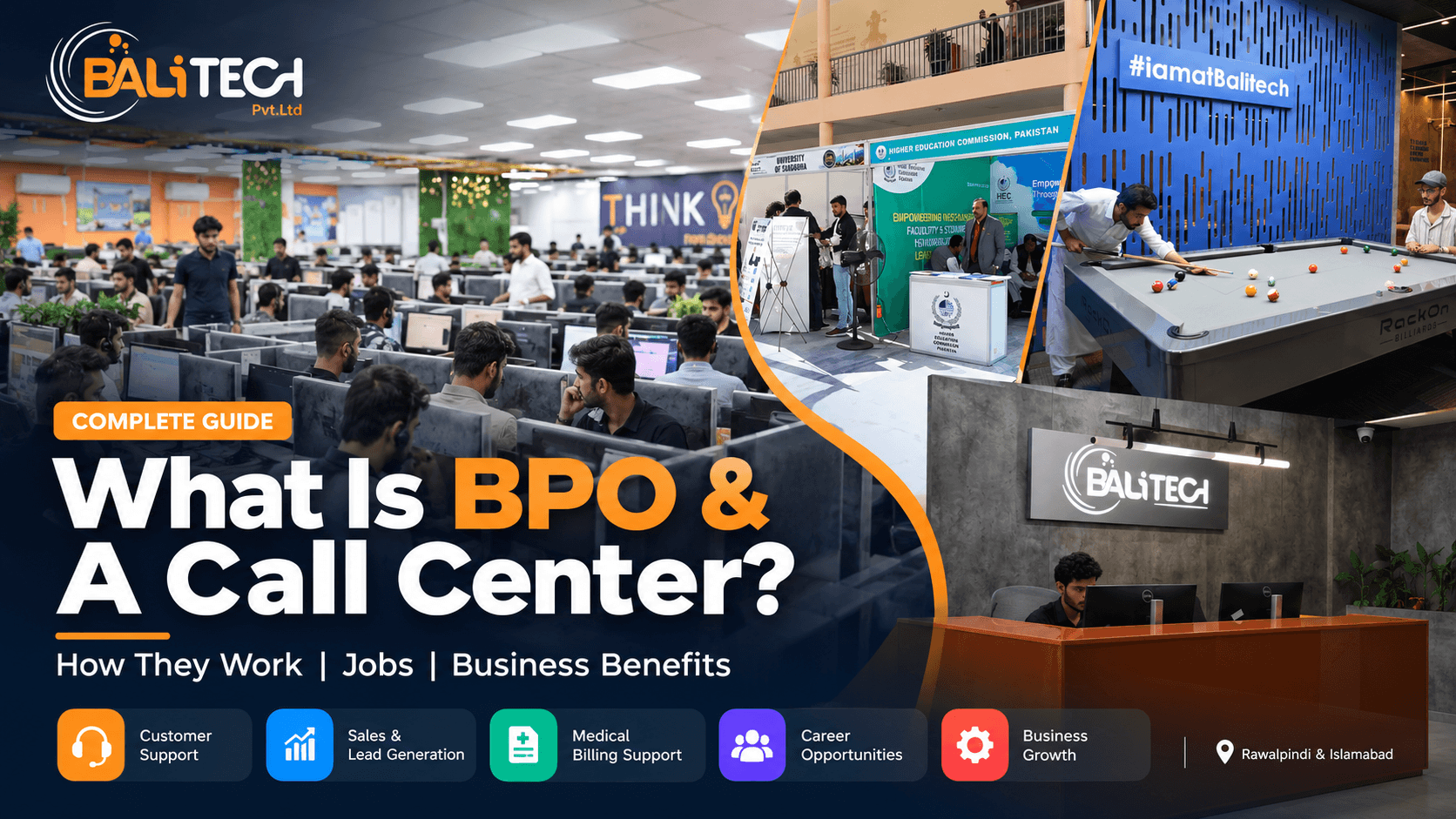
Understand the difference between BPO and call centers, the people and processes behind their operations, career opportunities, and how outsourcing helps businesses.
Have you ever wondered what actually happens inside a BPO or call center? Most people picture a busy office where employees wear headsets, speak with customers, and work on computers. While phone conversations are certainly part of the job, there is much more happening behind those calls. From customer service and sales to medical billing, technical support, quality assurance, and business operations, these workplaces bring together professionals with different skills and responsibilities.
BPO stands for Business Process Outsourcing. It is a business arrangement in which one company hires another organization to manage specific tasks or operations. A call center, on the other hand, mainly handles incoming and outgoing telephone calls. Both play an important role in modern businesses, create different employment opportunities, and help employees develop communication, sales, technical, and professional skills. Understanding the difference is useful whether you are looking for your first job, planning a career, or considering outsourcing for your business.
What Is BPO? Understanding Business Process Outsourcing
BPO, or Business Process Outsourcing, means assigning certain business activities to an external company that has the people, systems, and experience to handle them. Instead of building an internal department for every operational task, a business can work with a BPO provider to manage selected processes while maintaining oversight of its overall business goals.
For example, imagine a healthcare organization that needs additional support for medical billing and insurance claim follow-ups. Rather than expanding its entire internal billing department, it may work with a BPO company whose trained employees handle agreed billing tasks. Similarly, an online retailer may outsource customer enquiries, order support, or customer follow-ups to a service provider. The business still owns the customer relationship and remains responsible for its obligations, while the BPO team carries out the assigned work according to agreed requirements.
The important thing to understand is that BPO is not limited to telephone calls. Depending on the provider's capabilities, it may involve customer support, sales processes, administration, records management, data processing, technical support, financial processes, and healthcare-related support. A BPO organization may have several departments working on different projects for different clients.
What Does a BPO Company Actually Do?
A BPO company manages business activities on behalf of another organization. The exact work depends on the client's requirements, the type of industry, and the agreed services. Some BPO teams speak directly with customers, while others work behind the scenes processing information, reviewing records, preparing reports, or supporting administrative workflows.
A professionally managed BPO operation also needs people responsible for recruitment, employee training, quality assurance, supervision, reporting, and technology. These supporting functions help the organization maintain service standards and handle work consistently. This is why BPO should be understood as a combination of people, processes, management, and technology rather than simply a room filled with agents.
What Is a Call Center and What Happens There?
A call center is a workplace or organized operation where employees manage telephone conversations for a business. These conversations can involve answering customer questions, providing assistance, promoting products or services, confirming information, conducting follow-ups, arranging appointments, or supporting sales activities. Call centers can operate as departments within a company or provide outsourced services to other organizations.
When someone contacts a customer support number and speaks with an agent, that conversation may be handled by a call center. The same applies when a sales representative contacts a prospective customer about a legitimate product or service. The agent usually works with a computer system containing relevant customer information, approved procedures, and instructions for handling the conversation.
Modern call centers depend on much more than telephones. Agents may use customer relationship management software, dialers, call-routing systems, headsets, reporting tools, and internal communication platforms. Supervisors monitor operations, trainers help agents understand their work, and quality assurance teams review whether conversations meet the required standards.
What Is an Inbound Call Center?
An inbound call center primarily receives calls from customers or other people seeking assistance. For example, a customer may call a business to ask about an order, request account information, report a problem, or understand a service. An inbound agent listens to the enquiry, checks the available information, and provides assistance or transfers the issue to the appropriate team when necessary.
Inbound work requires patience, listening skills, product knowledge, and the ability to explain information clearly. Companies use inbound teams to manage customer communication and maintain consistent support. At BaliTech, inbound call center services are organized around customer enquiries, account support, escalation handling, and call quality monitoring.
What Is an Outbound Call Center?
An outbound call center primarily makes calls rather than waiting to receive them. Outbound agents may contact prospective customers, follow up on existing enquiries, arrange appointments, conduct permitted sales outreach, or reconnect with customers who need additional information. The purpose of a call depends on the campaign and the business being supported.
Outbound calling requires preparation, good communication, careful listening, and an understanding of the product or service being discussed. Employees also need to follow applicable calling rules, privacy requirements, and campaign instructions. Businesses that need structured sales outreach or follow-up support can learn more about BaliTech's outbound call center services.
What Is the Difference Between BPO and a Call Center?
The main difference between BPO and a call center is the range of work they perform. BPO is a broader outsourcing model that can include many business processes, while a call center mainly specializes in telephone-based communication. A call center may operate within a BPO company, but not every BPO employee works on calls, and not every call center is outsourced.
For example, an outsourced customer support department that receives calls may be both a call center and part of a BPO arrangement. However, a team handling medical billing records without making customer calls is performing a business process that does not necessarily belong to a call center. Likewise, a company operating its own internal telephone support department has a call center, even though it has not outsourced that department to a BPO provider.
How Their Responsibilities Compare
A call center generally concentrates on customer conversations, inbound support, outbound sales, appointment setting, follow-ups, and telephone-based verification. Its employees are commonly evaluated using measures such as call handling quality, customer experience, appropriate resolution, and campaign results.
BPO services can include all those activities, but the scope extends further. Depending on the contract, a BPO team may also process information, perform billing support, maintain records, manage administrative workflows, or provide other specialist services. Performance measures therefore depend on the actual process and may include accuracy, turnaround time, service quality, productivity, and compliance with agreed procedures.
Can a Company Be Both a BPO and a Call Center?
Yes. A company can provide outsourced call center services alongside other business process support. In fact, the two activities often work together because many business processes involve both communication and administrative work. An outbound sales campaign, for instance, may require agents to make calls, verify information, update customer records, and report campaign results.
BaliTech is an example of an organization operating across both areas. Its services include inbound and outbound calling, customer support, lead generation, sales verification, and back-office support. The company operates from Rawalpindi and Islamabad, bringing together calling teams and professionals working in supporting operational functions.
How Do BPO and Call Center Operations Work?
A BPO or call center operation usually begins with a clear business requirement. A client may need customer support, a sales outreach team, administrative assistance, or help managing a defined business process. Before employees begin work, the service provider needs to understand what the client expects, which systems will be used, what responsibilities belong to each team, and how performance will be measured.
Once the work is defined, the company organizes suitable employees, prepares procedures, configures relevant systems, and provides training. Team leaders and managers supervise the operation while quality assurance personnel review performance and identify areas requiring improvement. Results are reported to the client according to the agreed arrangement, and processes may be adjusted as business requirements change.
Campaign Planning and Employee Training
In call center operations, a campaign is a specific project or group of activities organized around defined business goals. One campaign may involve customer support, while another focuses on sales, lead generation, verification, or follow-up calls. Each campaign can have different instructions, performance expectations, and technical requirements.
Before working on a live campaign, agents need to understand their responsibilities. Training may include communication practice, product knowledge, approved scripts, customer handling, software usage, documentation, and relevant compliance requirements. At BaliTech, campaign-specific onboarding is part of the process of preparing teams before they begin handling live work.
Daily Work, Supervision, and Performance Reviews
During daily operations, frontline employees handle their assigned tasks while supervisors monitor workloads, address questions, and assist with operational issues. A supervisor may need to review attendance, understand campaign performance, support an employee who is struggling, or coordinate with other departments to resolve a technical or procedural problem.
Quality assurance is another important part of the process. Quality reviewers may evaluate recorded calls, check how employees follow instructions, and identify opportunities for improvement. In non-voice processes, quality reviews may focus on documentation accuracy or whether work follows the agreed workflow. Readers interested in a closer look at this operational structure can explore our article about people, technology, and operations inside a modern BPO.
Who Works in a BPO or Call Center?
People often think that everyone working in a call center has the same responsibilities. In reality, a functioning operation brings together employees with different abilities, experience levels, and professional backgrounds. Some work directly with customers, while others manage teams, maintain systems, review quality, recruit employees, or support business administration.
The exact organizational structure depends on the company's size and services. A small call center may combine several responsibilities under one manager, while a larger BPO organization may have dedicated departments for operations, training, quality assurance, IT, HR, finance, and other professional functions.
Call Center Agents and Customer Support Representatives
Call center agents are often the people most visible in the operation. They speak with customers or prospects, follow the relevant process, update records, and work toward the objectives assigned to their campaigns. Customer support representatives focus on understanding enquiries, providing accurate information, resolving issues within their authority, and escalating matters when additional help is required.
These roles require communication skills, attention to detail, and professional behavior. Depending on the campaign, agents may also need sales knowledge, the ability to use CRM systems, familiarity with particular industries, or experience handling regulated information.
Sales Representatives, Verifiers, and Closers
Sales teams help businesses communicate with prospective customers and explain their products or services. A representative may identify customer needs, answer relevant questions, and help move a suitable prospect through a sales process. Successful sales work depends on listening, product understanding, clear explanations, and responsible communication rather than simply speaking quickly or making as many calls as possible.
Some campaigns also have verifiers and closers. Verifiers check specified information or confirm that required steps have been followed. Closers may handle later stages of a sales conversation according to their assigned responsibilities. These job titles are especially common in certain insurance and outbound calling environments, although their duties vary across companies and campaigns.
Team Leaders, Trainers, and Quality Assurance Staff
Team leaders help agents understand daily targets, manage performance, and resolve problems that arise during work. Trainers prepare new employees and help existing teams improve their skills. Quality assurance professionals review calls or process outputs against the standards that have been established for the operation.
These roles help maintain consistency across a busy working environment. An agent may understand a product but still need coaching on how to explain it more clearly. A new employee may need support using a system, while an experienced employee may be preparing for a leadership position. Training and constructive feedback help teams develop over time.
IT, Medical Billing, HR, and Other Professional Teams
BPO organizations also need people whose work does not revolve around making sales calls. IT professionals maintain technical systems, connectivity, computers, and operational tools. HR and recruitment teams support hiring, employee administration, and workplace processes. Reporting and management personnel help the organization track work, make decisions, and coordinate departments.
Specialist functions can extend into areas such as medical billing and healthcare-related administrative support. At BaliTech, these activities sit alongside its call center campaigns. Our article on professional roles at BaliTech beyond calling and sales explores the variety of responsibilities within the organization.
What Skills Can Employees Learn While Working in a Call Center?
A call center job can provide practical experience that is useful in many professional fields. Employees communicate with different people, manage workplace expectations, become familiar with business software, and learn how to complete tasks within an organized environment. The skills they develop depend on their responsibilities, the quality of their training, and how actively they work on improving their performance.
Not every call center job automatically leads to a promotion or a specialist career. However, employees who develop strong communication skills, understand their work, and demonstrate reliability may become better prepared to apply for additional responsibilities when suitable opportunities arise.
Communication and Customer Handling Skills
One of the most valuable skills employees can develop is the ability to communicate clearly. Speaking with customers requires more than knowing English or following a prepared script. Agents need to understand questions, listen carefully, use appropriate language, and explain information in a way that makes sense to the person receiving it.
These abilities can be useful outside a call center as well. Employees may apply them in customer service, sales, administration, recruitment, account management, and other professional environments where effective communication matters.
Sales Skills and Confidence
Employees working on sales campaigns can gain practical exposure to customer conversations, product explanations, objections, and follow-up processes. They learn that a useful sales conversation begins with understanding a person's needs rather than immediately pushing a product. Building confidence involves preparation, clear explanations, and learning how to handle different responses professionally.
Sales experience can also help employees understand how businesses acquire customers and maintain relationships. The ability to communicate value, ask relevant questions, and document customer interactions is useful across different customer-facing roles.
Technical Skills and Professional Discipline
Many BPO employees work with CRM systems, dialers, ticketing platforms, spreadsheets, or industry-specific software. Becoming comfortable with these tools can help employees develop basic technical confidence and understand how digital systems support everyday business activities.
Employees also gain exposure to teamwork, time management, workplace communication, and performance expectations. Following documented procedures, managing responsibilities, and accepting constructive feedback can help establish professional habits that remain useful throughout a career.
How Do BPO and Call Centers Create Job Opportunities?
BPO and call center companies create employment by supporting business activities that require people with different levels of experience and specialist knowledge. Some entry-level roles may be suitable for candidates who have good communication skills and are willing to learn. Other positions require previous campaign experience, technical knowledge, management ability, or professional qualifications.
For people beginning their careers, certain call center positions can offer exposure to a structured workplace without requiring the same background as highly specialized professions. However, hiring requirements vary, and candidates should review the actual job description rather than assuming every role is open to freshers.
Opportunities for Freshers and Experienced Professionals
Freshers may begin by exploring customer support, introductory calling, or other junior positions that provide appropriate training. Experienced professionals may seek roles involving sales, verification, quality assurance, team leadership, operations, technology, or specialist processes. The right choice depends on a candidate's skills, interests, experience, and the vacancies currently available.
Someone who enjoys communication may prefer a customer-facing position, while someone with technical ability may be more interested in IT or systems support. A person who pays close attention to details could be better suited to a process-based or quality-related role. Understanding these differences helps candidates make more thoughtful career decisions.
Career Development and Leadership Opportunities
Career development in a BPO is not limited to moving from one calling campaign to another. Depending on the organization, employees may develop skills relevant to training, quality assurance, workforce coordination, supervision, or specialized business processes. Those opportunities depend on performance, experience, organizational requirements, and available positions.
For candidates exploring call center and BPO jobs at BaliTech, the Careers page is the most appropriate place to check current vacancies. It provides a more reliable picture of available positions than relying on an older recruitment post or assuming that every department is actively hiring.
How Do BPO and Call Center Services Help Businesses?
Companies use BPO and call center services for several reasons. Some want additional staff to manage growing customer demand, while others need specialist support for business processes they do not want to manage entirely in-house. Outsourcing can help a business access organized teams, extend service coverage, and concentrate internal resources on other priorities.
The benefits are not automatic. A successful outsourcing arrangement requires clear responsibilities, appropriate training, reliable communication, performance measurement, and consistent quality standards. Businesses should evaluate the provider's actual capabilities, security practices, and delivery model before assigning important work.
Customer Support and Better Communication
When a business receives a large number of customer enquiries, its internal employees may struggle to answer every request promptly. An outsourced customer support team can provide additional capacity by handling agreed enquiries, documenting issues, and routing complicated matters to the appropriate people.
This can help businesses maintain more consistent communication with customers, especially during busy periods. The quality of the experience still depends on knowledgeable agents, accurate information, effective escalation procedures, and regular performance reviews.
Sales Support and Lead Generation
Sales teams often spend substantial time identifying prospects, contacting potential customers, arranging meetings, and following up on enquiries. A BPO provider with relevant capabilities can support parts of this work, allowing the client's internal sales team to focus more attention on activities that require its particular expertise.
Lead generation services can involve prospect research, outreach, qualification, and scheduled handovers. A properly organized sales process should also respect applicable privacy and communication requirements. At BaliTech, sales outreach, verification, and lead generation are among the services described on our BPO and call center services page.
Administrative Work and Back-Office Support
Many essential business tasks happen away from direct customer conversations. Businesses may need support maintaining records, checking information, processing documents, or following up on pending work. When these processes are suitable for outsourcing, a dedicated team can help manage the workload according to defined procedures.
Medical billing is one example. Healthcare organizations may need assistance with claims-related tasks, eligibility and benefits verification, records accuracy, and follow-up on outstanding claims. BaliTech offers medical billing support as part of its wider business process services, demonstrating how BPO work can extend beyond traditional telephone-based operations.
Operational Flexibility and Business Growth
Business requirements change over time. A company may experience increased demand, launch a new product, or need temporary support for a specific project. Outsourcing can provide another option for organizing the people and processes needed to handle that work. Depending on the agreement, providers may offer dedicated teams, project-based arrangements, or additional capacity during busy periods.
Businesses should still compare outsourcing costs, management requirements, service quality, and operational risks with their internal alternatives. The goal is not simply to move work elsewhere. It is to create a practical arrangement in which the right people can complete the work accurately, consistently, and with clear accountability.
BPO and Call Center Opportunities in Rawalpindi and Islamabad
Rawalpindi and Islamabad are home to companies operating in customer support, outbound calling, sales, technology, and business process services. For people researching BPO jobs in Rawalpindi or call center jobs in Islamabad, it is useful to understand that different employers may specialize in different kinds of work. Some are focused primarily on calling campaigns, while others provide additional technical, administrative, or back-office services.
Job seekers should look beyond a company's name and ask what the position actually involves. An inbound support role can be quite different from an outbound sales position. Medical billing work requires different knowledge from a campaign verifier position, while a technical support role may require experience with computer systems or networking. Understanding the job description, working hours, training, and responsibilities is important before applying.
Understanding BaliTech's Work in Rawalpindi and Islamabad
BaliTech operates BPO and call center services from offices in Rawalpindi and Islamabad. Our working environment includes inbound and outbound campaigns, customer support, lead generation, sales verification, medical billing support, and the teams responsible for managing these operations. Employees across different functions contribute to the work, from frontline calling and supervision to quality assurance, recruitment, and technology support.
People searching for the best call center in Rawalpindi may be comparing employers, training opportunities, work environments, and the variety of available careers. Instead of relying on a single description or ranking claim, we encourage candidates to explore the actual responsibilities of the roles available at BaliTech, understand our operations, and decide whether a position matches their abilities and career goals.
Exploring Career Opportunities at BaliTech
Whether someone is interested in customer communication, sales, technical operations, quality assurance, or another professional field, learning how a BPO operates is a useful starting point. An understanding of the industry can help applicants prepare better questions, identify relevant skills, and recognize the differences between entry-level and experienced positions.
Interested candidates can review our current vacancies and use the BaliTech Join Us page to submit an application. Available jobs, requirements, and recruitment decisions depend on the organization's current needs. For businesses, our website also provides information about the outsourcing services and operating models available through BaliTech.
Frequently Asked Questions About BPO and Call Centers
What is the full form of BPO?
BPO stands for Business Process Outsourcing. It refers to an arrangement in which a business hires an external service provider to manage certain operational tasks or processes. These can include customer service, sales support, administration, billing, and other business functions.
What is a call center in simple words?
A call center is an operation where employees handle incoming or outgoing telephone calls for a business. Agents may answer customer questions, provide support, make follow-up calls, arrange appointments, or work on sales campaigns.
Is BPO the same as a call center?
No. A call center focuses mainly on telephone communication, while BPO covers a wider range of outsourced business processes. Call center services can be part of BPO, but outsourcing can also involve work such as medical billing, records processing, and administrative support.
What are the main types of BPO?
BPO is commonly divided into front-office and back-office services. Front-office services involve activities such as customer support and sales communication, while back-office services may include administrative processing, records management, and billing support. BPO can also be categorized as onshore, nearshore, or offshore depending on the locations of the client and service provider.
What is the difference between inbound and outbound calling?
Inbound calling involves receiving calls from customers who need assistance or information. Outbound calling involves contacting people for approved business purposes such as follow-ups, appointment setting, customer outreach, and sales. Both require communication skills and appropriate training.
Can freshers work in a call center or BPO?
Yes, some call center and BPO positions are suitable for freshers, especially when the employer provides introductory training. However, other jobs require previous experience, specialist knowledge, or technical skills. Candidates should check each vacancy's requirements before applying.
What skills are required for a BPO or call center job?
The required skills depend on the position. Communication, listening, basic computer knowledge, attention to detail, and a professional attitude are useful in many roles. Sales positions may require stronger persuasion and customer-handling skills, while technical or specialist roles may require additional qualifications or experience.
Is working in a call center a good career option?
A call center can be a useful career starting point for someone interested in customer support, sales, business operations, or professional communication. Career satisfaction and growth depend on the working environment, training, individual performance, job responsibilities, and available opportunities. It is worth comparing roles carefully before making a decision.
How does BPO help businesses reduce operational pressure?
BPO allows businesses to assign agreed tasks to an external team instead of managing every activity internally. This may provide additional capacity, specialist support, or more flexible staffing. Results depend on choosing an appropriate provider, defining responsibilities clearly, and maintaining effective quality control and communication.
Does BaliTech provide both BPO and call center services?
Yes. BaliTech provides inbound and outbound call center operations alongside other outsourced services, including customer support, lead generation, sales verification, and medical billing support. These services are delivered through teams operating in Rawalpindi and Islamabad.
Understand the Industry and Explore Opportunities at BaliTech
BPO and call centers are connected, but understanding their differences gives a clearer picture of how modern businesses operate. Call centers manage important customer conversations, while BPO services extend into a much wider range of business activities. Together, these operations involve employees from different professional backgrounds and create opportunities to develop communication, sales, technical, management, and specialist skills.
At BaliTech, we bring both areas together through our call center campaigns and wider business process services in Rawalpindi and Islamabad. If you are exploring career opportunities, visit our Careers section to learn about available positions. If you represent a business looking for customer support, calling teams, lead generation, or back-office assistance, explore our services to understand how BaliTech may support your operational requirements.