
November 3, 2026
Is Call Center Work Stressful? Understanding the Pressure, Challenges, and Career Reality
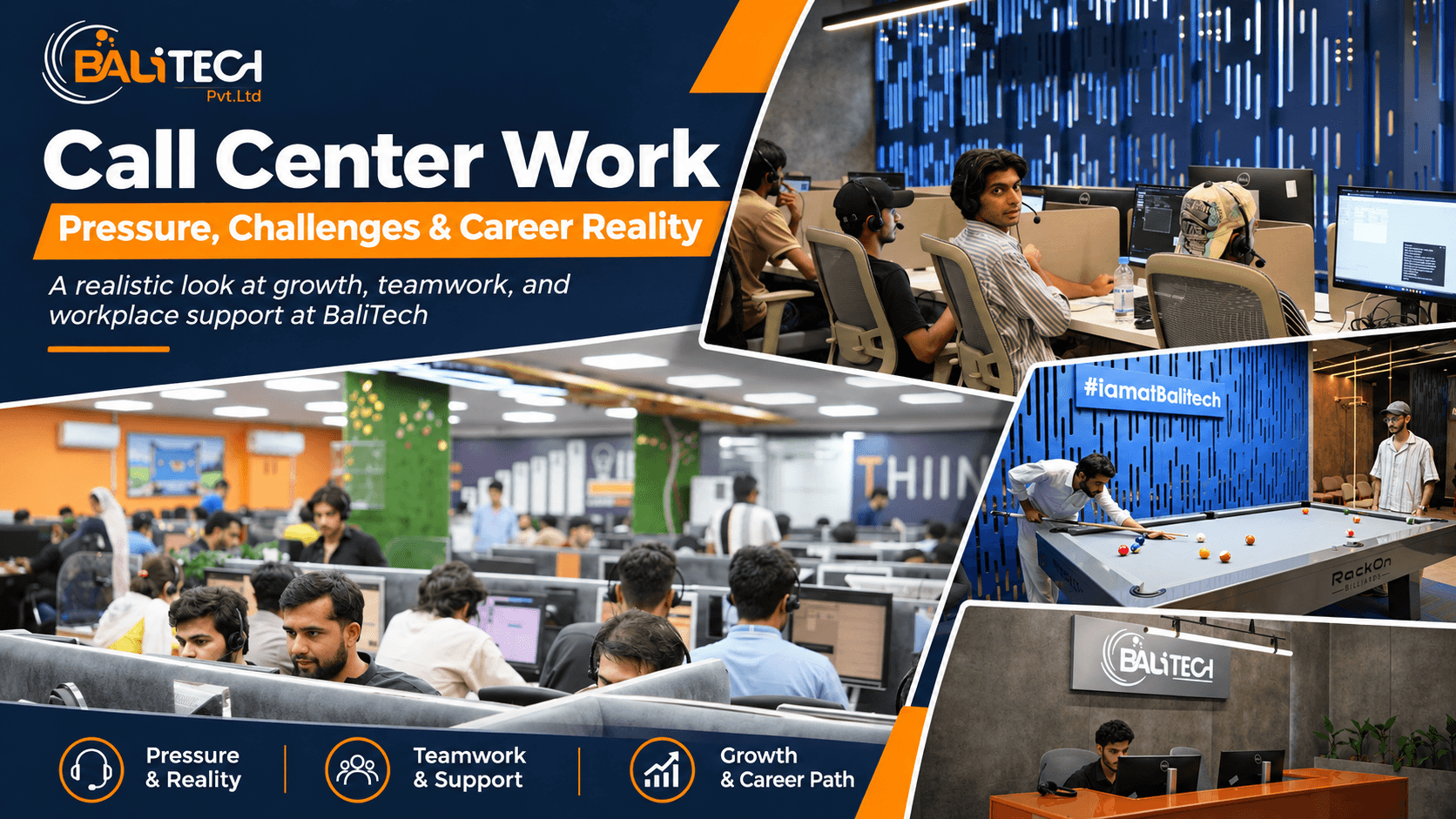
Call center work can be demanding, but pressure is only one part of the story. Learn what the real call center work environment is like, how training and team support help employees succeed, and how a professional BPO role can develop into a long-term career.
If you ask people what it is like working in a call center, you will probably hear very different answers. One person may talk about targets and difficult customer conversations, while another may tell you that the job helped them improve their English, build confidence, understand professional systems, and eventually move toward quality assurance, training, leadership, or another role. Both experiences can exist because there is no single call center work environment that represents the entire BPO industry.
The realistic answer is that call center work can sometimes be demanding, just like many performance-based professions, but that does not mean it has to become an unhealthy or negative career. The actual experience depends on the campaign, role, training, management, shift, targets, team structure, workplace facilities, and the support employees receive while learning the job. In a structured environment, the pressure that comes with professional responsibility can also become the experience that helps someone develop communication, discipline, customer handling, confidence, and leadership skills.
At BaliTech, we see call center and BPO work as a professional career environment rather than simply a place where people make calls. Our teams work across different campaigns and professional functions in Rawalpindi and Islamabad, supported by training, supervisors, QA teams, leadership, recognition initiatives, and opportunities for performance-based growth. The work requires commitment, but employees should also have an environment where they can learn, improve, work with a team, and build a career over time.
Is Call Center Work Actually Stressful?
Call center work can involve pressure, but it is not automatically a stressful career for everyone. Customer conversations, performance expectations, quality standards, shift schedules, and learning new systems can all create demanding moments. At the same time, employees who understand their campaign, receive proper training, work with supportive supervisors, and become comfortable with the process often find that the job becomes much more manageable as their experience grows.
It is also important to separate normal professional pressure from a poor workplace experience. Having goals, quality expectations, or responsibilities does not automatically mean a job is unhealthy. Most careers involve some form of accountability. The difference is whether employees understand what is expected, have the tools and knowledge to perform the job, and know where to get help when something goes wrong. A professional BPO work environment should give people structure around the work rather than leaving them to figure everything out alone.
Why Do Some People Find Call Center Jobs Challenging?
The challenges usually come from several parts of the job happening at the same time. An employee may need to listen to a customer, understand the campaign, follow a process, use a CRM or dialer, record the correct information, maintain a professional tone, and think about the next step in the conversation. Someone new to the industry can initially find that combination difficult because each task is still unfamiliar.
Experience changes that. Once systems become familiar and campaign knowledge improves, employees spend less mental energy thinking about every individual step. They begin recognizing common customer questions, understand how calls normally progress, and know when a situation needs help from a supervisor. What felt complicated during the first few days can eventually become part of a normal professional routine.
Customer Conversations Can Be Demanding, but They Build Real Skills
One of the biggest adjustments for someone new to a call center is learning that every conversation will not be easy. Some customers are friendly and patient. Others may be confused, in a hurry, uninterested, or frustrated. An agent cannot control the personality of every person on the other side of the call, but they can learn to control their own response.
This is where professional communication becomes a real workplace skill. Employees learn to listen before responding, keep their tone calm, explain information clearly, and avoid allowing one difficult conversation to affect the next call. Over time, those skills become useful far beyond the operations floor. Communication, patience, problem-solving, and confidence can support future roles in customer service, sales, training, quality assurance, management, and other professional environments.
For candidates who worry that successful communication requires a perfect foreign accent, our guide on English accent and communication requirements for call center jobs explains why clarity, listening, comprehension, and professional communication usually matter more than trying to imitate someone else's voice.
Performance Targets Are Part of the Job, Not the Whole Job
When people hear the words “call center targets,” they sometimes imagine an environment where every second is controlled by a number. In reality, performance measurement can include different things depending on the campaign. A sales team may care about qualified outcomes or conversions. Customer support may focus more on service quality, response handling, and correct resolution. Verification teams can have their own standards around accuracy, required questions, and process completion.
Targets become easier to understand when employees know what is being measured and why. Clear expectations allow people to see where they are performing well and where they need improvement. Performance data should not exist only to create pressure. Used properly, it can help employees understand their own progress, supervisors identify where support is needed, and management recognize stronger performance.
Training Makes a Major Difference Before Live Work
One of the biggest factors affecting the experience of working in a call center is what happens before the employee reaches the live floor. Giving someone a headset and a script without preparation would make almost any role feel unnecessarily difficult. Training gives employees time to understand the campaign, systems, customer process, quality expectations, and the responsibilities attached to their role.
At BaliTech, campaign-specific onboarding happens before agents begin handling live volume. Training can include campaign knowledge, scripts, systems, communication standards, and quality expectations depending on the operation. Once the team goes live, learning does not stop. Supervisor oversight, QA review, feedback, and coaching remain part of the wider operating process.
We explain this process in more detail in Before the First Live Call: How Call Center Training Prepares Agents for the Floor. For someone considering a BPO career, understanding how a company prepares employees can be just as important as understanding the job title itself.
Team Leaders Can Make a Big Difference in Career Development
A good team leader does more than check numbers. Team leaders are often the people closest to the daily experience of the operations floor. They can see where an employee is improving, where a process is creating confusion, and where someone needs more guidance. For new employees, having an experienced person available can make the transition from training to live work much more comfortable.
At BaliTech, our wider operating model includes supervisors, team leadership, QA, and defined management responsibilities around active campaigns. Team leaders can help employees understand campaign expectations, learn from feedback, improve communication, and become more confident with live situations. The goal should not be to make employees dependent on a supervisor forever. Good support helps people become capable enough to handle more responsibility themselves.
This is also where career development can begin. Employees who become stronger in their role often start learning more about the wider operation. They may become interested in quality, training, reporting, leadership, technology, or campaign management. Career growth is not automatic and depends on performance, skills, organizational needs, and available opportunities, but the knowledge gained on the floor can become a foundation for the next step.
Quality Assurance Should Help Employees Improve
Quality monitoring can sound intimidating to someone who has never worked in a professional call center. In practice, QA should provide a clear standard around the work. Employees need to know whether the correct process was followed, whether information was communicated accurately, and whether there are parts of the interaction that can improve.
At BaliTech, QA works alongside supervision and reporting rather than existing as a completely separate activity. Call reviews and performance feedback help operations teams understand what is happening during real customer interactions. A useful quality process should identify mistakes when necessary, but it should also help employees understand how to perform more consistently.
Our detailed article on how BaliTech maintains quality across call center operations explains how monitoring, supervision, reporting, and feedback work together across different teams.
Not Every Call Center Role Creates the Same Type of Pressure
One reason people have such different opinions about working in a call center is that the phrase covers many different jobs. A CSR, verifier, closer, QA professional, trainer, medical billing employee, dialer professional, and team leader can all work inside the same BPO organization while having very different daily responsibilities.
A CSR may spend more time responding to customer questions and service needs. A verifier may need strong attention to detail because certain information has to be confirmed correctly. A closer may deal with more sales objections and performance expectations. QA professionals review work rather than handling exactly the same conversations as agents. Technical and support teams experience a different type of responsibility again.
Candidates should therefore judge the actual role, not the word “call center.” Our guide to Verifier, Closer, and CSR Roles in Call Centers explains how several common positions differ and why the right role depends on a person's experience and strengths.
Inbound and Outbound Work Feel Different
Inbound and outbound operations can both require concentration, but the pressure usually comes from different places. In inbound work, customers are contacting the company because they need something. They may have a question, need assistance, or be dealing with a problem. Employees need patience, listening skills, and the ability to guide the conversation toward the correct solution or next step.
Outbound work begins differently because the company is initiating the conversation. Agents may need to deal with rejection, qualify interest, explain an offer, follow campaign scripts, or move the customer through a defined process. Someone who enjoys sales and quick conversations may feel comfortable in outbound work, while another person may prefer the service-oriented nature of inbound support.
Neither model is automatically more difficult. The experience depends on the employee's strengths, the campaign, training, expectations, and management around the operation.
Night-Shift Work Requires a Routine
Many international call center jobs operate during evening or night hours because teams in Pakistan may be supporting businesses and customers in other time zones. At BaliTech, current campaign shifts are generally listed Monday through Friday from 6:00 PM to 4:00 AM, although candidates should always check the live vacancy because requirements can differ by position.
A night shift can work well when employees build a proper routine around it. Sleep, meals, transport, family time, and personal responsibilities need to fit the schedule rather than being treated as an afterthought. Someone who repeatedly changes their sleeping pattern may find the shift more difficult than someone who follows a consistent routine.
Our existing guide to night-shift call center jobs in Rawalpindi explains the working schedule, career considerations, and what candidates should think about before accepting a night-shift role.
A Good Workplace Is More Than Desks and Headsets
The physical and social environment around the job matters. Employees spend a significant part of their week at work, especially on full campaign shifts, so the experience should not be reduced to sitting at a workstation and watching numbers. People also need opportunities to interact with colleagues, take proper breaks, and feel part of a functioning workplace.
At BaliTech, our offices are designed around active operations, but the workplace also includes spaces and facilities that give employees room to step away from the floor during breaks. Play-area facilities, food arrangements, team interaction, and a more relaxed atmosphere outside active work periods help create balance during long shifts. These things do not replace professional expectations, but they can make the office feel more human and comfortable.
Our Gallery gives candidates a direct look at BaliTech office floors, team workstations, celebrations, employee activities, recognition events, and everyday workplace moments rather than expecting people to understand the company only from written descriptions.
Recognition Matters in a Performance-Driven Workplace
Performance should not only be discussed when something goes wrong. Employees also need to know that improvement and strong results are visible. BaliTech's workplace culture includes recognition activities, team celebrations, performance-based growth opportunities, and daily, weekly, and monthly bonus structures where applicable to the role and campaign.
This does not mean every employee receives the same reward or promotion simply for completing a certain amount of time. Performance-based growth should remain connected to results, skills, organizational needs, and available positions. The important point is that strong work should have a path toward recognition rather than disappearing into the daily routine.
Can Freshers Build a Career in a Call Center?
Yes, depending on the vacancy and the candidate's communication ability, willingness to learn, and fit for the role. A fresher does not need to know everything about the BPO industry on the first day. What matters is whether the position accepts candidates without previous experience and whether the person can develop the skills required for the campaign.
For many young professionals, a call center can be one of the first places where they learn how a structured workplace operates. They become familiar with attendance requirements, professional communication, customer interaction, CRM systems, reporting, quality standards, teamwork, and performance measurement. Those skills can continue to matter even if their long-term career eventually moves toward another department.
Candidates looking for call center jobs for freshers, call center jobs in Rawalpindi, or BPO jobs Rawalpindi should still read the actual vacancy carefully. Some campaigns are suitable for people entering the industry, while others require previous experience.
A Call Center Career Does Not Have to End on the Phone
One of the biggest misconceptions about the industry is that someone who joins as an agent will remain in exactly the same role forever. BPO operations require much more than people speaking with customers. Quality assurance, training, supervision, reporting, recruitment, HR, technology, dialer management, operations, medical billing, and leadership can all exist within the same organization.
Experience on a live campaign can help an employee understand which direction suits them. Someone who enjoys reviewing processes may become interested in QA. A strong communicator may eventually enjoy training. Someone who naturally supports colleagues may develop leadership skills. Another employee may become interested in technology or reporting after learning more about the systems behind the operation.
BaliTech's career environment is built around the idea that strong performers should continue developing. Our Join Us page highlights skill-development initiatives, performance-based promotion, collaborative culture, and a dynamic working environment as part of that approach.
Why the Team Around You Matters
People often focus heavily on the company name when researching a job, but the immediate team can have an equally large effect on the everyday experience. A strong team communicates, shares campaign knowledge, supports new employees, and does not treat every question as a weakness. Team leads and experienced employees can make it much easier for someone new to understand how the operation really works.
At BaliTech, the phrase “Together We Build Success” reflects that idea. Individual performance matters, but no large BPO operation runs through individual effort alone. Agents, verifiers, closers, QA professionals, trainers, supervisors, operations teams, HR, and technical staff all contribute to the wider working environment.
What Should You Look for Before Joining a Call Center?
Instead of asking only whether the company has a famous name or whether the salary sounds attractive, candidates should look at the full working environment. Understand the exact role, the campaign, the shift, whether training is provided, how performance is measured, who supervises the team, where the office is located, and whether the company provides opportunities to learn beyond the immediate position.
It is also useful to look at the workplace itself. Are there real offices? Can you see the operations environment? Does the company publish current vacancies clearly? Are leadership, recognition, training, and employee development visible? These details can help candidates make a more informed decision rather than relying only on comments or assumptions.
What Makes BaliTech a Strong Workplace for BPO Professionals?
BaliTech has grown from a seven-person team in 2022 into an organization of more than 900 professionals across four offices in Rawalpindi and Islamabad. That growth has required more than adding seats. It has required teams, supervisors, QA, training, systems, reporting, and leadership structures that can support active campaigns at a larger scale.
Our workplace combines performance expectations with development opportunities. Employees work within structured campaign environments while also having access to team leadership, training, QA feedback, recognition activities, skill-development initiatives, and performance-based career opportunities. The office environment also includes areas and facilities where employees can relax during breaks, including play spaces and workplace food arrangements that help make the shift more comfortable.
We also believe employees should be able to see the people and environment behind the company. BaliTech regularly shares team activities, celebrations, recognition moments, workplace events, and office environments through our website and Gallery. For candidates researching BaliTech before applying, this provides a more realistic view of the organization than a job title alone.
Call Center Jobs in Rawalpindi and Islamabad
Rawalpindi and Islamabad have become important employment markets for international BPO and call center operations. Searches such as call center in Rawalpindi, BPO in Rawalpindi, call center jobs in Rawalpindi, call center jobs Islamabad, and international call center jobs can lead to many different types of positions, which is why candidates need to look beyond the search result and understand what the actual role involves.
BaliTech currently operates offices in Shamsabad, Satellite Town/Commercial Market, Iran Road, and Islamabad I-9/3. Different roles can be attached to different branches, so candidates should confirm the location before applying. Current addresses and contact information are available through our Rawalpindi and Islamabad office locations.
What Does “Best Call Center” Really Mean for an Employee?
People frequently search for the best call center in Rawalpindi, best call center in Islamabad, or best call center in Pakistan. Those searches can be useful for discovering companies, but “best” should mean more than having a recognizable name.
For an employee, a strong workplace should provide a clear role, professional environment, reasonable expectations, proper training, leadership support, visible quality standards, opportunities to improve, and an environment where good performance can lead somewhere. The best fit will still depend on the individual. Someone interested in sales may enjoy a completely different campaign from someone interested in customer support, QA, medical billing, or technical operations.
Our guide to call center jobs and career opportunities in Rawalpindi and Islamabad explains how candidates can compare roles, offices, shifts, and workplace factors before choosing where to apply.
How Can Employees Handle Work Pressure More Effectively?
The first step is understanding the job rather than trying to fight every difficult moment individually. Learn the campaign properly. Understand the systems. Ask questions during training. Listen to feedback. If a team leader or QA professional identifies the same issue repeatedly, work on that specific behavior instead of treating the feedback as a personal criticism.
It also helps to separate one call from the next. A difficult customer conversation should not automatically become the mood for the entire shift. Take the lesson that matters, follow the process, and move forward. Professional experience grows when employees learn how to recover quickly instead of allowing one interaction to control the next hour.
Outside active work, routine also matters. Employees working night shifts need enough sleep, sensible meals, time away from screens, and a schedule that allows them to recover before the next shift. A strong career is easier to build when the person takes their own routine seriously as well as the job.
Frequently Asked Questions About Call Center Work
Is call center work stressful?
Call center work can sometimes be demanding because employees may handle customer conversations, performance targets, quality standards, systems, and shift schedules. However, the experience depends heavily on the campaign, training, management, workplace environment, and support structure. In a well-managed BPO, employees can learn to handle the responsibilities confidently and build valuable professional skills.
Why do some people find call center jobs stressful?
Common challenges can include difficult customer conversations, learning new systems, performance expectations, high activity levels, and adjusting to shift schedules. These challenges often become easier to manage as employees gain experience, understand the campaign, and receive proper support.
Is a call center job good for freshers?
A call center can be a useful starting point for freshers when the vacancy accepts candidates without previous experience. It can help people develop communication, customer handling, CRM knowledge, teamwork, professional discipline, and confidence. Candidates should always review the actual job requirements because some campaigns require previous experience.
Is working in a BPO a good career?
BPO work can develop into a long-term career for people who continue building useful skills. Employees may begin in customer-facing roles and later become interested in QA, training, supervision, operations, technology, reporting, HR, or other professional functions. Growth still depends on performance, skills, organizational needs, and available opportunities.
Are all call center jobs target-based?
No. Different operations measure different outcomes. Sales teams may work with conversion or qualification goals, while customer-support operations can focus more on service quality, response standards, or resolution. Verification and QA teams also have their own performance criteria.
Does BaliTech provide training?
Yes. BaliTech's operating model includes campaign-specific onboarding and training before agents handle live volume. The launch stage continues with supervisor support, QA review, coaching, and reporting so learning does not stop after the first live call.
Does BaliTech offer career growth?
BaliTech promotes skill development and performance-based growth. Career movement is not automatic after a fixed amount of time; it depends on performance, skills, organizational requirements, and available positions. Employees who continue learning can build experience that may help them move toward other responsibilities over time.
What is the work environment like at BaliTech?
BaliTech operates a performance-driven but collaborative BPO environment across four offices in Rawalpindi and Islamabad. The workplace includes structured teams, supervisors, QA support, training, recognition activities, employee events, play-area facilities, food arrangements, and opportunities for skill development and performance-based progression.
Where can I see BaliTech's workplace before applying?
Candidates can visit the official BaliTech Gallery to see office floors, workstations, employee events, celebrations, recognition activities, and other workplace moments. Current roles are listed on the BaliTech Careers page.
Where are BaliTech offices located?
BaliTech currently operates offices in Rawalpindi and Islamabad, including Shamsabad, Commercial/Satellite Town, Iran Road, and Islamabad I-9/3. Candidates should check the office attached to the current vacancy before applying.
How can I apply for a job at BaliTech?
Current vacancies are published through the official BaliTech Careers page. Candidates can also use the Join Us page to review opportunities and submit their information. Because campaign requirements change, applicants should rely on the live vacancy rather than an older job post.
The Career Reality: Pressure Can Become Professional Growth
Call center work should not be presented as either completely easy or automatically stressful. It is professional work, and professional work comes with expectations. There will be busy shifts, difficult conversations, targets, new systems to learn, quality feedback, and moments when an employee has to improve. But those same experiences can also build confidence, discipline, communication, customer handling, campaign knowledge, and the ability to perform as part of a team.
The difference often comes down to the environment around the employee. Training makes the first calls easier. Team leaders help people understand the floor. QA turns mistakes into useful feedback. Recognition gives strong performers something to work toward. Workplace facilities and team activities make long shifts more comfortable. Career pathways give people a reason to continue learning instead of seeing the job as only a temporary seat.
At BaliTech, we want employees to understand that performance and workplace experience do not have to compete with each other. We operate active international campaigns and expect people to take their responsibilities seriously, but we also believe people perform better when they have support, opportunities to learn, a professional team around them, and an environment where they can grow. That is what we mean when we say “Together We Build Success.”
If you are exploring a career in the BPO industry and want to understand what opportunities are currently available across our Rawalpindi and Islamabad offices, visit the BaliTech Careers page or Join Us to review the latest openings.