
November 12, 2026
7 Things Nobody Tells You Before Starting a Call Center Job
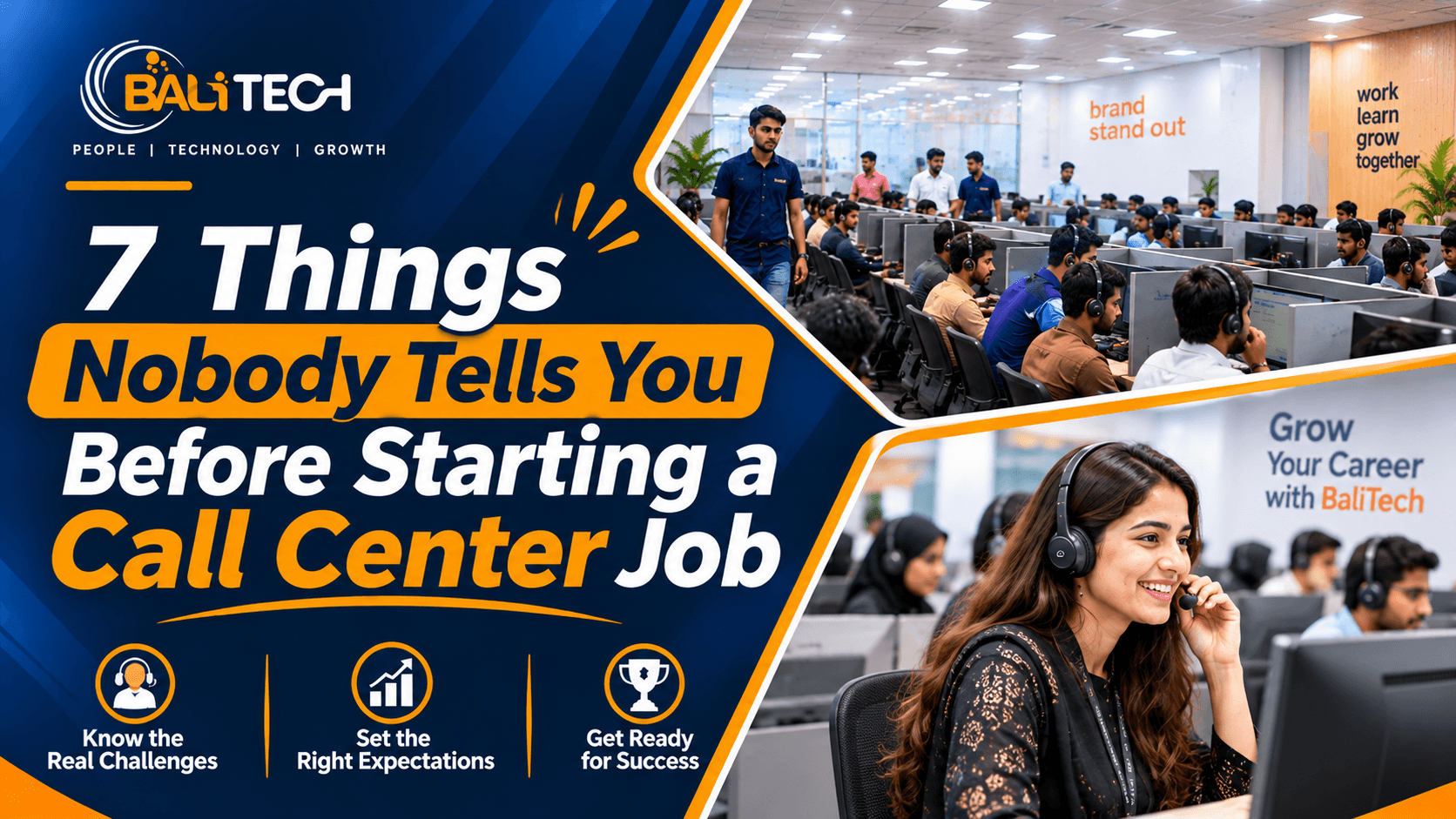
Your first call center job is more than just answering calls, it's an opportunity to build confidence, develop valuable skills, and start your professional journey. Discover 7 things every beginner should know before joining a call center and explore exciting career opportunities with BALITECH!
Starting your first call center job can be an important step toward professional life. For fresh graduates and beginners, it offers a chance to develop communication skills, gain practical work experience, and understand how professional teams operate.
However, a call center job involves more than answering calls. Depending on the position, you may handle customer enquiries, support sales campaigns, verify information, generate leads, or work with business support processes. Each role comes with different responsibilities, schedules, and performance expectations.
Understanding these details before applying can help you choose a position that matches your interests and prepare for the workplace. In this guide, we cover seven important things to know before starting a call center job, practical advice for beginners, and what candidates should consider when exploring career opportunities at BALITECH.
1. Communication Skills Matter More Than Perfect English
One common concern among beginners is whether their English is good enough for a call center job. Many candidates believe they need advanced vocabulary, a particular accent, or perfect grammar before applying. In reality, effective communication is about making information easy to understand. The language requirements depend on the campaign, but clear speaking, good listening, and professional behaviour are useful in customer-facing positions.
Clear Communication Builds Confidence
You do not need complicated sentences to communicate professionally. Simple language, a respectful tone, and clear explanations can make conversations easier for customers. For example, if a customer asks about a service, explain the relevant information directly instead of using unnecessary technical words.
Listening Is Just as Important as Speaking
Good communication also means understanding what another person is saying. Before answering a question, listen carefully and identify the customer's actual concern. This helps you provide relevant information instead of giving an unrelated response.
Confidence Develops Through Practice
If you feel nervous about speaking English, regular practice can help.
Some useful habits include:
- 1. Practising everyday English conversations.
- 2. Listening to English speakers.
- 3. Learning common customer service expressions.
- 4. Speaking clearly without rushing.
- 5. Asking questions when you do not understand something.
These are valuable skills needed for call center jobs, particularly international voice campaigns.
2. Every Customer Interaction Is Different
Another important part of call center work is understanding that every conversation can have a different purpose. Even when employees follow the same campaign process, customers may have different questions, expectations, and concerns.
Understanding Different Customer Needs
In inbound operations, customers may contact a company for information, order support, account assistance, or help with an issue. Outbound campaigns involve a different approach. Agents may contact potential customers for sales, follow-ups, appointments, or verification activities. The purpose of each conversation depends on the assigned campaign.
Handling Difficult Conversations Professionally
Some customers may be confused, frustrated, or unwilling to continue a conversation. Beginners sometimes find these situations challenging because they are still learning how to respond professionally. The best approach is to remain calm, listen carefully, and follow the required procedure. Avoid interrupting customers or making promises that are not supported by the company's policies.
Patience Makes a Difference
Customer service skills for beginners include patience, active listening, and respectful communication. You should also learn to adjust your explanations according to the customer's needs. Someone who needs a simple answer should not receive a complicated explanation.
3. Targets and Performance Metrics Are Part of the Job
Call center job expectations are not limited to completing conversations. Employees may also be evaluated according to campaign requirements, communication quality, accuracy, and productivity. These expectations vary between positions, so understanding your role is important.
Understanding Call Center KPIs
Key Performance Indicators (KPIs) help organizations measure performance against defined objectives. Different departments may use different measurements.
For example:
- 1. Sales campaigns may focus on sales outcomes and conversions.
- 2. Customer support operations may evaluate service quality and issue handling.
- 3. Verification campaigns may focus on accuracy and completion of required procedures.
- 4. Lead generation teams may be evaluated according to lead qualification requirements.
Not every employee is measured against the same targets.
Quality and Productivity Both Matter
Completing a high number of calls does not automatically mean that the work is accurate or professional. Employees must understand the campaign process, communicate the correct information, and complete their responsibilities properly. BALITECH's operating model includes quality assurance, call monitoring, reporting, and supervisor oversight to support campaign standards.
Feedback Helps You Improve
Supervisors and quality assurance teams may identify areas where an employee needs improvement. Instead of treating feedback as criticism, use it to understand what needs to change. Learning from mistakes is an important part of gaining call center work experience.
4. Call Center Training Is an Important Part of Your Journey
Beginners are not expected to know every campaign procedure before joining. Training and onboarding help employees understand their responsibilities before handling live work. This is particularly important for candidates applying for their first professional position.
Learning the Campaign and Its Responsibilities
Training introduces employees to the campaign they will be working on.
Depending on the position, this may include:
- 1. Understanding the campaign's purpose.
- 2. Learning about products or services.
- 3. Understanding customer communication requirements.
- 4. Following scripts and conversation guidelines.
- 5. Learning company policies and procedures.
- 6. Becoming familiar with relevant workplace systems.
The exact training content depends on the assigned role.
Understanding Scripts and Communication Techniques
Scripts provide guidance about how employees should communicate during particular interactions. However, simply memorising sentences is not enough. You should understand the information behind the script and know how to follow the required process. Practice conversations can also help beginners become more comfortable before handling live interactions.
Learning Workplace Systems
Modern BPO operations involve digital tools in addition to phone conversations. Depending on the campaign, employees may use CRM platforms, dialers, customer records, reporting tools, or other systems. Learning how these tools work is part of becoming familiar with your responsibilities.
Asking Questions During Training
If something is unclear, speak with your trainer or supervisor. Asking for clarification helps prevent misunderstandings and allows you to learn the correct procedure. At BALITECH, the published operating model includes campaign-specific onboarding, product training, supervisor oversight, quality reviews, and coaching.
For a closer look, read Before the First Live Call: How Call Center Training Prepares Agents for the Floor.
5. Understanding Call Center Shifts and Work Schedules
Working hours are an important part of starting a call center career. Before accepting a position, understand its schedule and consider how it will fit into your daily routine. Many international BPO campaigns operate according to overseas business hours. This means employees in Pakistan may work evening or overnight shifts.
Understand the Assigned Shift
Different campaigns and positions can have different schedules. For example, BALITECH's current career listings include Monday-to-Friday shifts such as 6:00 PM to 4:00 AM for certain campaign roles and 7:00 PM to 5:00 AM for a training position. These are examples from listed vacancies, not universal working hours for every position. Always check the schedule mentioned in the specific job description.
Maintain Attendance and Punctuality
Professional workplaces depend on organized schedules and team coordination. Arriving on time, following attendance procedures, and understanding your assigned break arrangements are important responsibilities.
Build a Consistent Routine
If you are working an evening or night shift, organize your sleep, meals, transportation, and personal responsibilities around your working hours. A consistent routine can make it easier to manage professional responsibilities without constantly changing your daily schedule.
6. Why Teamwork Matters in Call Center Jobs
Although agents often handle individual customer conversations, call center operations depend on several people working together. Supervisors, trainers, quality assurance professionals, and team leaders all contribute to daily operations.
Learn From Experienced Colleagues
Experienced employees can help beginners understand campaign procedures and workplace expectations. Observe how they communicate, manage their responsibilities, and respond to different situations. You can also ask relevant questions when you need guidance.
Support From Supervisors and Team Leaders
Supervisors and team leaders help employees understand their responsibilities and address operational concerns. If you face difficulty with a particular process, communicate with the appropriate person rather than making assumptions. Quality assurance teams also help identify areas where employees can improve.
Contribute to a Positive Workplace
Respectful communication and cooperation make daily work easier. Be willing to share knowledge, support teammates, and maintain a professional attitude. BALITECH highlights employee recognition, team activities, workplace culture, and professional development as part of its organizational environment.
7. Your Calls May Be Reviewed for Quality
Starting a call center job means understanding that your work is not measured only by the number of calls you handle. Call quality, communication, accuracy, and following campaign guidelines are also important parts of the job.
Quality Checks Help You Maintain Professional Standards
Call center companies use quality assurance (QA) processes to review employee performance. These checks may focus on how clearly you communicate, whether you follow the required script, and how professionally you handle customer conversations.
Feedback Helps You Improve Your Performance
You may receive feedback from your supervisor or quality team about your calls and daily performance. Instead of taking feedback negatively, use it as an opportunity to identify mistakes and improve your skills. Learning from these reviews can help you become more confident, communicate better, and handle your responsibilities more effectively.
How to Know If a Call Center Job Matches Your Expectations
Before applying, take some time to understand what the position actually involves. The term "call center job" covers different types of work, and not every role will match your interests or expectations.
Here are four important things to check.
1. Working Hours and Shift Requirements
Check the exact working days, starting time, finishing time, and office location. If a vacancy involves an overnight schedule, consider whether you can maintain that routine consistently. Also, confirm whether the position is on-site or offers another working arrangement. BALITECH's current listed vacancies specify on-site office locations.
2. Voice-Based Versus Non-Voice Responsibilities
Voice-based positions involve speaking with customers or potential customers through calls.
These roles may include:
- 1. Inbound customer support.
- 2. Outbound sales.
- 3. Lead generation.
- 4. Appointment setting.
- 5. Verification activities.
Non-voice and back-office responsibilities involve work that does not primarily depend on live customer calls. Examples within the wider BPO industry include documentation, records management, claims-related support, and administrative processes. BALITECH lists business process support and medical billing support among its services. However, candidates should check the actual vacancy to confirm whether a particular role is voice-based, non-voice, or a combination of responsibilities.
3. Sales Versus Customer Support Campaigns
Sales and customer support positions have different objectives. In sales campaigns, employees may contact potential customers, explain relevant services, answer questions, and work toward defined sales outcomes. Customer support roles generally focus on customer enquiries, account or order assistance, and resolving or routing issues. Verification positions have another purpose: confirming information and following an approved process. Before applying, make sure you understand which type of work the employer expects you to perform.
4. Salary Structure and Performance Expectations
Salary is another important consideration. Do not assume that all call center jobs offer the same compensation structure. Pay can depend on the position, experience, campaign, and employer's compensation policy. Candidates should confirm the compensation details for the specific vacancy, including any applicable performance-based components, before accepting an offer. Understanding these four areas can help you avoid confusion and select a position that better matches your expectations.
Tips to Succeed in Your First Call Center Job
Once you understand the workplace, developing good professional habits can make your first job experience more manageable.
Here are six practical call center tips for beginners:
1. Stay Confident and Willing to Learn
Do not expect yourself to know everything immediately. Give yourself time to understand your role and become comfortable with the process.
2. Listen Before Responding
Understand the customer's question before providing an answer. Good listening helps prevent unnecessary confusion.
3. Accept Constructive Feedback
Take suggestions from trainers, supervisors, and quality teams seriously. Apply their guidance to improve your performance.
4. Maintain Punctuality
Follow your assigned working schedule and develop a consistent daily routine.
5. Focus on Continuous Improvement
Work on your communication, campaign knowledge, and ability to complete tasks accurately.
6. Ask Questions When You Need Help
If you are unsure about a procedure, seek guidance from your trainer or supervisor instead of making assumptions.
Is a Call Center Job Right for You?
A call center position can be a suitable starting point for people who enjoy communication and want to gain professional experience.
It may be worth exploring if you:
- 1. Enjoy communicating with people: Many customer-facing roles involve regular professional conversations.
- 2. Are a fresh graduate: Some vacancies accept candidates entering professional life, depending on their requirements.
- 3. Are interested in sales or customer support: Different campaigns offer different responsibilities and learning experiences.
- 4. Are willing to learn: Training and campaign knowledge are important parts of many BPO positions.
- 5. Can work in a team: Call center operations involve coordination between employees, supervisors, trainers, and other departments.
Before applying, consider the working hours, job responsibilities, experience requirements, and office location.
The right opportunity is one that matches your interests and the requirements you can realistically meet.
Why Start Your Call Center Career with BALITECH?
Choosing your first employer is an important decision. You should understand the available positions, training process, working environment, and expectations before applying. BALITECH is a Pakistan-based BPO organization established in April 2022. According to its official About page, the company has grown from an initial team of seven people into an organization with more than 900 professionals across four offices in Rawalpindi and Islamabad. Its recruitment opportunities cover different campaign and professional functions.
Explore Actual Hiring Opportunities
BALITECH publishes vacancies through its official Careers page. Its listed positions include campaign roles such as ACA verification and Final Expense sales, alongside other professional functions such as training and quality assurance. Some positions are suitable for candidates with relevant communication skills, while others specifically require previous experience. Fresh graduates should review individual job descriptions rather than assume that every vacancy is an entry-level position.
Understand the Training Approach
BALITECH's operating model includes campaign-specific onboarding and product training before employees handle live campaign volume. The process also includes supervisor oversight, quality assurance reviews, coaching, and reporting. This gives candidates a clearer understanding of how training and ongoing performance development fit into the company's operations.
Professional Workplace Environment
BALITECH operates physical offices in Rawalpindi and Islamabad. Its website also showcases workplace activities, employee recognition, team events, and office environments through its Gallery. These details help candidates understand the organization and its workplace culture before applying.
Skill Development and Career Opportunities
BALITECH identifies professional development, leadership opportunities, and performance-based progression as part of its organizational goals. Employees can gain experience within different campaign and professional functions, depending on their responsibilities and available opportunities. Career progression is not automatic; it depends on individual performance, relevant skills, organizational needs, and vacancies.
Explore Career Opportunities at BALITECH
If you are interested in starting a call center career, review the available positions and check their requirements before applying. Visit the BALITECH Careers Page to explore current openings, job descriptions, schedules, and office locations. Explore Career Opportunities at BALITECH and find a position that matches your skills and experience.
Conclusion
Starting a call center job becomes easier when you understand what the workplace expects from you. Communication, customer handling, performance standards, training, shift schedules, teamwork, and professional development all play a role in your experience. Taking time to understand these areas can help you choose a suitable position and prepare for your responsibilities.
Remember that your first job is also an opportunity to learn, build confidence, and gain practical experience. You do not need to know everything before starting, but you should be willing to improve.
If you are ready to explore your options, visit the BALITECH Careers Page and review the latest opportunities.
Frequently Asked Questions (FAQs)
1. Is a call center job good for beginners?
Yes, some call center positions are suitable for beginners, particularly vacancies that accept candidates without previous experience. These opportunities can help fresh graduates develop communication skills, understand professional responsibilities, and gain practical work experience. However, requirements vary by position.
2. What skills do you need before starting a call center job?
Useful skills include clear communication, active listening, patience, professionalism, basic computer confidence, and willingness to learn. Sales, verification, customer support, and specialized BPO positions may require additional abilities.
3. Is English fluency necessary for call center jobs?
English requirements depend on the campaign. International voice positions generally require employees to communicate clearly in English and understand customer conversations. Perfect vocabulary or a particular accent should not be confused with effective communication. Always check the language requirements of the vacancy.
4. Is working in a call center difficult?
Call center work can involve customer conversations, performance expectations, scheduled shifts, and learning new systems. Beginners may need time to become comfortable with these responsibilities. Training, regular practice, and supervisor guidance can help employees improve.
5. What should I expect on my first day at a call center?
Your first day may involve company orientation, meeting team members, understanding workplace procedures, and learning about your assigned position. Depending on the role, onboarding may also introduce you to campaign information, scripts, communication guidelines, and workplace systems.
6. Can fresh graduates apply for call center jobs?
Yes, some call center vacancies accept fresh graduates, while others require previous experience. Candidates should review the education, communication, schedule, and experience requirements mentioned in each job description before applying.
7. How can I succeed in my first call center job?
Understand your responsibilities, communicate clearly, listen carefully, maintain punctuality, and follow company procedures. Accept constructive feedback and ask for guidance when needed. Continuous improvement is important when building professional experience.