
November 19, 2026
Skills Beyond Call Monitoring, What Makes a QA Executive Successful in the BPO Industry?
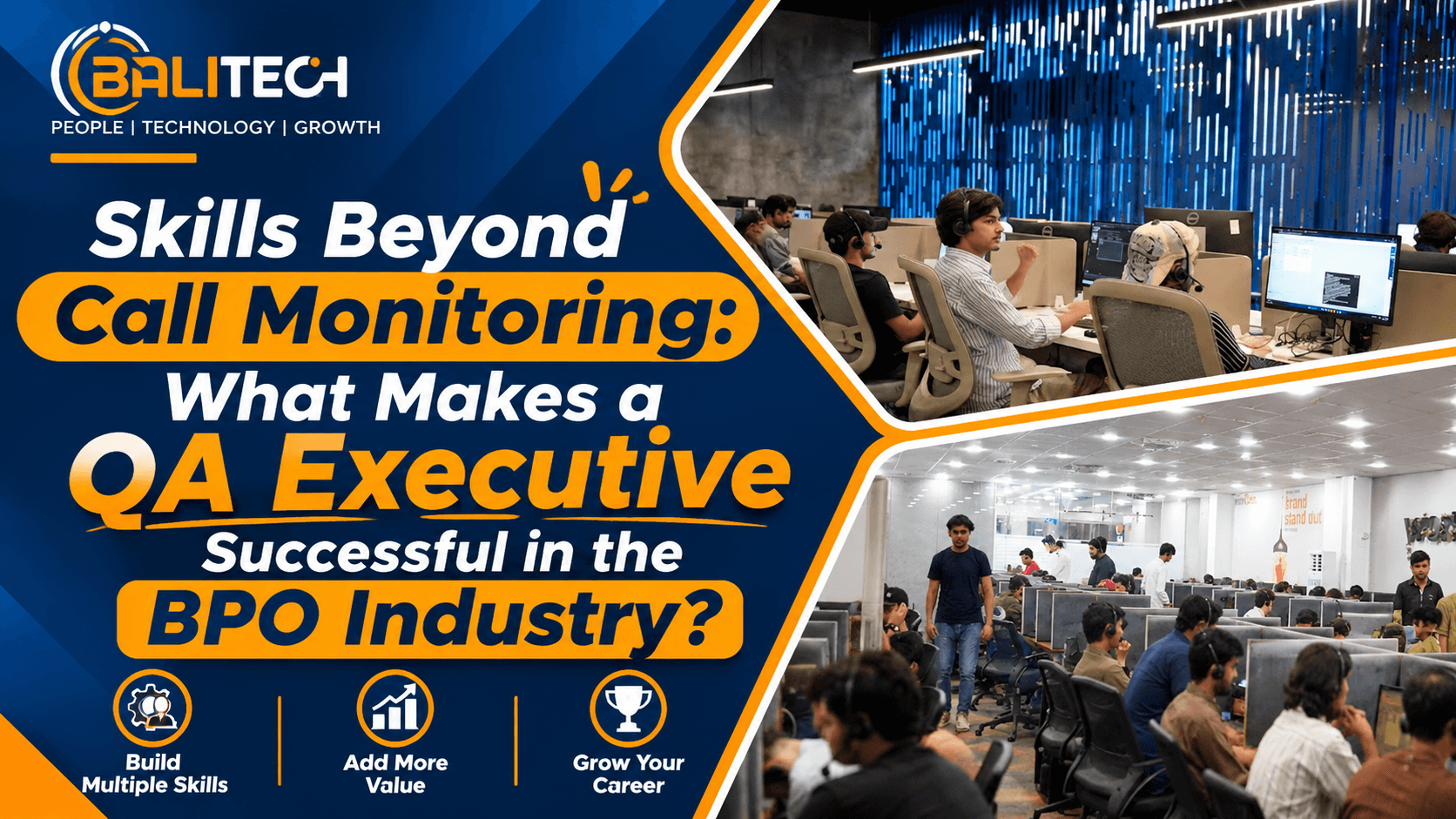
Great QA isn't just about finding mistakes; it's about understanding what happens behind every call. Discover the skills, insights, and responsibilities that help a Call Center QA Executive maintain quality standards and make a real difference in team performance.
A call center's success depends on more than the number of calls handled or sales completed. The quality of every customer interaction also plays an important role. Call Center QA Executive helps maintain these standards by reviewing calls, identifying performance gaps, and ensuring that agents follow campaign requirements. However, doing this job successfully requires more than listening to recorded conversations.
Let's explore the essential skills, responsibilities, and challenges that make a successful Call Center QA Executive.
Understanding the Role of a Call Center QA Executive
A Call Center QA Executive is responsible for reviewing agent interactions and checking whether they meet the required quality standards. Their work helps identify errors, recognize performance gaps, and maintain consistency across customer interactions.
In a BPO environment, different campaigns have different requirements. Some focus on customer support, while others involve sales, lead generation, or verification. QA professionals must understand these requirements before evaluating an agent's performance.
Why Quality Assurance Matters in Call Centers
Quality assurance helps ensure that agents follow the correct processes during customer interactions. It also allows management to understand whether employees are meeting campaign expectations. Through regular call reviews, QA Executives can identify areas that need attention and share useful findings with supervisors.
Their work supports:
- 1. Consistent customer interactions.
- 2. Better adherence to campaign guidelines.
- 3. Accurate communication of information.
- 4. Identification of repeated agent mistakes.
- 5. More structured performance evaluations.
How QA Executives Support Campaign Standards
Every campaign has specific instructions that agents must follow. QA professionals review interactions to check whether these instructions are being followed correctly. For example, a verification campaign may require agents to confirm particular details, while a sales campaign may have specific script and process requirements. Understanding these differences helps QA Executives evaluate calls fairly and accurately.
Essential Skills That Make a Successful Call Center QA Executive
A successful QA Executive needs a combination of analytical thinking, attention to detail, communication, and problem-solving abilities. These skills help professionals evaluate interactions properly and provide useful feedback to employees.
Strong Analytical and Observation Skills
A QA Executive must be able to recognize details that may not be immediately noticeable during a regular conversation. Simply listening to a call is not enough. Professionals must understand what happened, identify possible mistakes, and determine whether the interaction followed the required standards.
Strong analytical skills help QA professionals:
- 1. Identify repeated mistakes during call reviews.
- 2. Recognize patterns in agent performance.
- 3. Understand where campaign instructions are not followed.
- 4. Identify areas that require further investigation.
For example, if an agent repeatedly misses an important step, a QA Executive should recognize the pattern rather than treating every incident as an unrelated mistake.
Attention to Detail and Accuracy
Small mistakes can affect the quality of a customer interaction. Incorrect information, missed verification steps, and incomplete responses can all influence an evaluation. This is why attention to detail is an essential call center quality assurance skill. A QA Executive should carefully compare each interaction with the relevant evaluation criteria.
Important practices include:
- 1. Following defined evaluation guidelines.
- 2. Checking important details during call reviews.
- 3. Avoiding assumptions about agent performance.
- 4. Recording findings accurately.
- 5. Applying consistent evaluation standards.
Accuracy also matters when documenting results. Incorrect findings can lead to unnecessary confusion and unhelpful feedback.
Knowledge of Campaign Guidelines and Compliance
Different campaigns have different processes and expectations. A QA Executive must understand these requirements before evaluating agents. For example, sales and verification campaigns may require specific scripts and verification steps. Customer support operations may focus more on enquiry handling and appropriate responses.
A knowledgeable QA professional should understand:
- 1. Campaign-specific instructions.
- 2. Approved calling scripts.
- 3. Required verification steps.
- 4. Important compliance requirements.
- 5. Situations that may require escalation.
Understanding these guidelines helps QA Executives identify when an agent has followed the correct process and when an interaction needs attention.
Critical Thinking and Problem-Solving
Identifying an error is important, but understanding its cause makes a QA Executive more effective. Sometimes, an agent may make a mistake because of a misunderstanding, incomplete campaign knowledge, or difficulty applying an instruction during a conversation. Instead of simply recording the mistake, a QA professional should examine the situation.
This involves:
- 1. Understanding the reason behind repeated mistakes.
- 2. Separating individual errors from recurring issues.
- 3. Recognizing areas that need additional attention.
- 4. Sharing useful observations with supervisors.
- 5. Supporting improvements through accurate findings.
For example, if multiple agents make the same mistake, the issue may require a closer review of campaign instructions or the way information is communicated to the team.
Communication and Feedback Skills
QA Executives regularly share evaluation findings with agents and supervisors. Therefore, clear communication is essential. They should be able to explain mistakes without creating unnecessary confusion. Feedback should focus on the actual issue and the correct process. Good communication helps agents understand their evaluation results and what needs attention.
Responsibilities of a QA Executive Beyond Call Monitoring
Call monitoring is an important part of the job, but it is not the only responsibility. QA Executives also work with evaluation criteria, performance findings, feedback, and reporting. These activities help maintain consistent quality standards across call center operations.
Evaluating Agent Performance Through Quality Scorecards
A QA scorecard provides a structured way to evaluate agent interactions. It includes specific criteria that help determine whether an employee has followed the required standards.
Depending on the campaign, these criteria may include:
- 1. Script adherence.
- 2. Accuracy of information.
- 3. Communication during customer interactions.
- 4. Completion of required verification steps.
- 5. Following the correct calling process.
A QA Executive uses these criteria to assess interactions rather than relying on personal opinions.
Maintaining Consistency in Call Scoring
Consistency is important when evaluating different agents. Similar situations should be assessed according to the same quality requirements. QA professionals should understand each section of the scorecard and apply the defined criteria fairly. This helps ensure that evaluation results accurately reflect agent performance.
Identifying Recurring Performance Issues
One mistake does not always indicate a larger performance problem. However, when the same issue appears across multiple calls, it may require further investigation. A QA Executive should recognize these patterns and share relevant observations with supervisors.
Common issues may include:
- 1. Repeated script deviations.
- 2. Incomplete information during interactions.
- 3. Missed verification steps.
- 4. Inconsistent handling of similar situations.
- 5. Repeated errors in following campaign instructions.
Identifying these patterns helps teams understand which areas require attention.
Providing Constructive Feedback to Agents
Feedback is one of the most important parts of quality assurance. An evaluation becomes more useful when agents understand what went wrong and what they should do differently. A successful QA Executive should communicate findings clearly and professionally.
Useful feedback should:
- 1. Identify the specific issue found during the review.
- 2. Explain which requirement was not followed.
- 3. Clarify the expected process.
- 4. Highlight areas where the agent performed well.
- 5. Suggest what needs improvement.
For example, instead of simply telling an agent that their call handling was poor, a QA Executive can explain which required step was missed. This makes feedback more practical and easier to understand.
Supporting Coaching Through Evaluation Findings
QA findings can also help supervisors identify areas where agents need additional guidance. When repeated mistakes appear in evaluations, the information can be used during coaching sessions to explain the correct approach. This makes quality reviews more meaningful because the focus moves beyond identifying errors toward helping employees understand their performance.
Preparing Quality Reports and Sharing Findings
Quality reports help organize evaluation results and make performance information easier to understand. QA Executives may document reviewed calls, evaluation outcomes, repeated issues, and other relevant observations.
A useful quality report should:
- 1. Present evaluation results accurately.
- 2. Highlight repeated performance issues.
- 3. Record important observations.
- 4. Identify areas requiring attention.
- 5. Support performance discussions.
Clear reporting also helps supervisors and management understand what is happening across their teams.
Common Challenges QA Executives Face in Call Center Operations
Quality assurance can become challenging when professionals need to maintain consistent evaluations across different campaigns, employees, and operational requirements. Understanding these challenges helps QA Executives manage their responsibilities more effectively.
Maintaining Consistency Across Different Evaluations
Different agents may handle different customer situations, even when they work on the same campaign. A QA Executive must apply the defined evaluation criteria fairly instead of allowing personal preferences to influence the results. Following the same guidelines and documenting findings clearly can help reduce inconsistencies.
Handling High Volumes of Calls and Reviews
In busy call center operations, QA professionals may need to review multiple interactions while maintaining evaluation accuracy. Completing more reviews should not come at the cost of attention to detail. A structured review process, proper task organization, and clear evaluation criteria can help professionals manage their workload.
Evaluating Different Campaign Requirements
A BPO company may operate multiple campaigns, each with its own calling process and expectations. For example, verification work and customer support interactions may require different evaluation criteria. QA professionals must stay familiar with the relevant campaign instructions, approved scripts, and quality requirements. This helps prevent incorrect evaluations and ensures that agents are assessed according to their actual responsibilities.
Balancing Quality Standards With Agent Performance Expectations
Call center agents often work toward specific campaign targets while also following quality requirements. A successful QA Executive understands that quality and performance should be considered together. An interaction should not be evaluated only by how quickly it was completed or whether a particular outcome was achieved. The correct process, accuracy of information, and required standards also matter.
How to Build a Successful Career as a Call Center QA Executive
Building a career in quality assurance requires practical knowledge, patience, and the ability to evaluate work objectively. Individuals interested in this field can develop several abilities to prepare themselves for QA responsibilities.
Develop Strong Listening and Observation Skills
Pay attention to the details of conversations and learn to recognize when important information is missed. Understanding different customer interactions can also help you identify common call handling mistakes.
Improve Analytical Abilities
Practice identifying patterns, reviewing performance information, and understanding the reasons behind repeated errors. These abilities can help you evaluate calls more effectively.
Learn Quality Evaluation Methods
Understand how QA scorecards work and how different evaluation criteria are applied during call reviews. Familiarity with structured evaluations can help you assess agent performance more accurately.
Understand Campaign Processes
Become familiar with campaign-specific instructions, scripts, verification steps, and compliance requirements. This knowledge helps you evaluate interactions according to the correct standards.
Improve Reporting and Documentation Skills
Learn to record findings accurately and communicate evaluation results in a clear and organized way. Good documentation helps supervisors understand performance concerns and review important findings.
Gain Practical Call Center Experience
Working in a call center environment can help candidates understand agent responsibilities, campaign expectations, and common operational challenges. Experience is particularly valuable because QA professionals need to understand the actual work they are evaluating. For individuals interested in experienced QA positions, the ability to identify errors, explain findings, and provide constructive feedback can be especially important.
Explore Quality Assurance Career Opportunities at BALITECH
BALITECH provides opportunities across different BPO operations, including quality assurance, campaign management, and support functions. Its operational model includes call monitoring, defined QA scorecards, sampled call reviews, and feedback connected with evaluation findings. For professionals interested in becoming a Call Center QA Executive, the role requires more than listening to recorded interactions. Attention to detail, the ability to identify errors, an understanding of campaign requirements, and clear communication are important qualities for this position.
BALITECH's homepage highlights experience in a QA department, error identification, and constructive feedback among the requirements for its QA Executive opportunity. Candidates with relevant experience who want to explore opportunities in a BPO environment can visit the BALITECH website to learn more about the company and check available career opportunities.
Explore career opportunities at BALITECH and take the next step toward a career in call center quality assurance.